Content
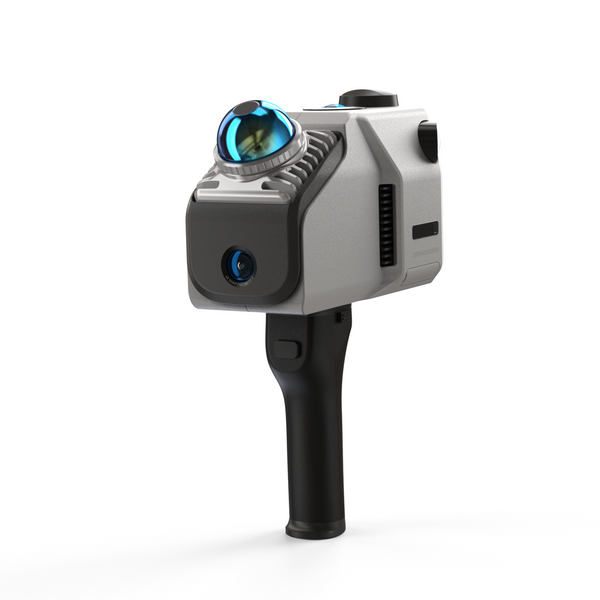
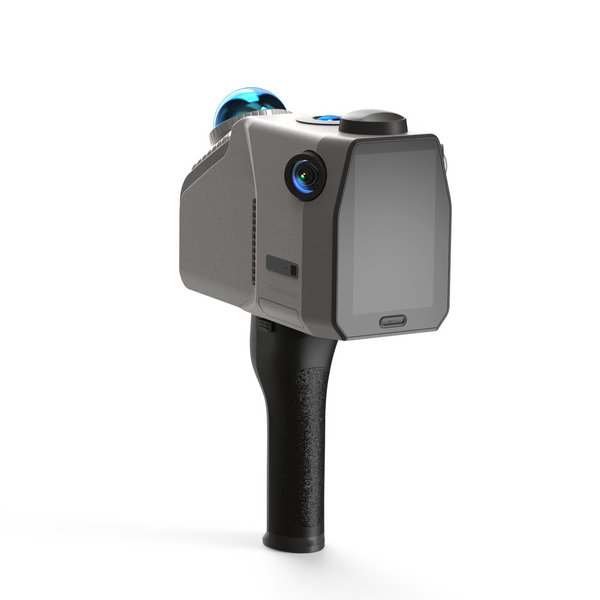
If you want to understand the next massive leap in 3D technology, look no further than Gaussian Splatting. This guide breaks down everything you need to know about this revolutionary technique: what it is, how it works, and how it compares to older methods like Point Clouds, Meshes, and NeRFs. We will also explore its real-world applications and how advanced spatial capture tools—like the 3DMakerpro Raven and Eagle—are making high-quality digital twins more accessible than ever.
What Is Gaussian Splatting?
At its core, Gaussian Splatting is an advanced 3D reconstruction and rendering technique. Instead of building digital environments using traditional rigid polygon surfaces, it represents the real world using millions of optimized, volumetric "Gaussian primitives." By capturing geometry, exact lighting, complex reflections, and textures simultaneously, it creates breathtakingly realistic 3D scenes that can be rendered and explored in real time.
How Gaussian Splatting Works: The "Ball of Fog"
At first glance, Gaussian Splatting might seem like completely alien technology, but its workflow begins in a familiar place: overlapping photographs or LiDAR scans. Computer vision algorithms use these images to estimate camera angles and generate a sparse point cloud. But instead of turning those points into a hard mesh, the system takes a radically different path.
Imagine each point in space not as a single, hard dot, but as a soft, translucent "ball of fog." Each of these balls (the Gaussians) has specific, trainable properties:
-
Position: Where it sits in 3D space.
-
Opacity: How “solid” or “see-through” it is.
-
Color: Calculated using mathematical functions called “Spherical Harmonics.” This allows the fog ball's color to change depending on the angle you are looking from—perfect for capturing complex reflections and shine.
-
Covariance: A fancy term for its shape and orientation. Essentially, it determines whether the fog ball is a perfect sphere, or stretched out flat like a pancake, or long like a cigar, to better fit a surface.
-
The Optimization Phase: During processing, the software repeatedly compares its collection of “fog balls” against the original photographs. It continuously adjusts their position, shape, color, and opacity until the digital scene perfectly matches reality.
- The "Splatting": The name refers to how these 3D fog balls are projected onto your 2D screen during rendering. It is a process of rapid rasterization—like taking a wet paintbrush and "splatting" paint onto a canvas. By layering millions of these soft, translucent splats, the computer creates a final image that is nearly indistinguishable from a photograph.

The 3D Gaussian Splatting Workflow (Source: Wikipedia)
Point Cloud vs. Meshes vs. Gaussian Splatting
To understand why Gaussian Splatting is changing the industry, we must first look at the concepts behind traditional 3D formats:
- Point Clouds: A collection of raw data points in 3D space. They provide highly accurate coordinates, making them essential for measurement and surveying, but they lack solid surfaces and visual realism.
- Meshes: A structural surface made of connected polygons (usually triangles). Meshes are excellent for defining solid, hard shapes in CAD or gaming, but rigid triangles struggle to accurately represent complex visual details like fluffy hair, leaves, or transparent glass.
- Gaussian Splatting: A volume-based representation that abandons solid geometry. Instead, it uses mathematical primitives to dynamically capture light, color, and texture, delivering unmatched photorealism.
To easily remember the difference, think of this visual analogy: Point clouds are a collection of individual dots. Meshes are a wire sculpture connecting those dots. Gaussian Splatting is a watercolor painting, where colors, lighting, and fine details blend naturally together, focusing entirely on how the scene actually looks.

Gaussian Splatting vs. Neural radiance field (NeRF)
Before Gaussian Splatting, Neural Radiance Fields (NeRFs) were considered the ultimate breakthrough in photorealism. Both aim to recreate reality from photos, but they approach the problem differently:
-
NeRF learns a scene: It uses an AI neural network to predict how light behaves in a space. While the visual quality is stunning, the AI requires immense computational power to “guess” the colors every time you move the camera. Rendering a NeRF is notoriously slow.
- Gaussian Splatting builds a scene: It doesn’t rely on a heavy neural network during rendering. Because it uses explicit geometric primitives (the Gaussians), modern computer graphics cards can process them natively.
The result? Gaussian Splatting matches the stunning photorealism of NeRF but achieves real-time rendering speeds, making it practical for interactive applications rather than just pre-rendered videos.
"Video clip of a neural radiance field", from Wikipedia, Jurdein.
Real-World Applications
Because it combines extreme photorealism with real-time performance, Gaussian Splatting is rapidly expanding across multiple industries:
1. Surveying, Infrastructure, and Digital Twins
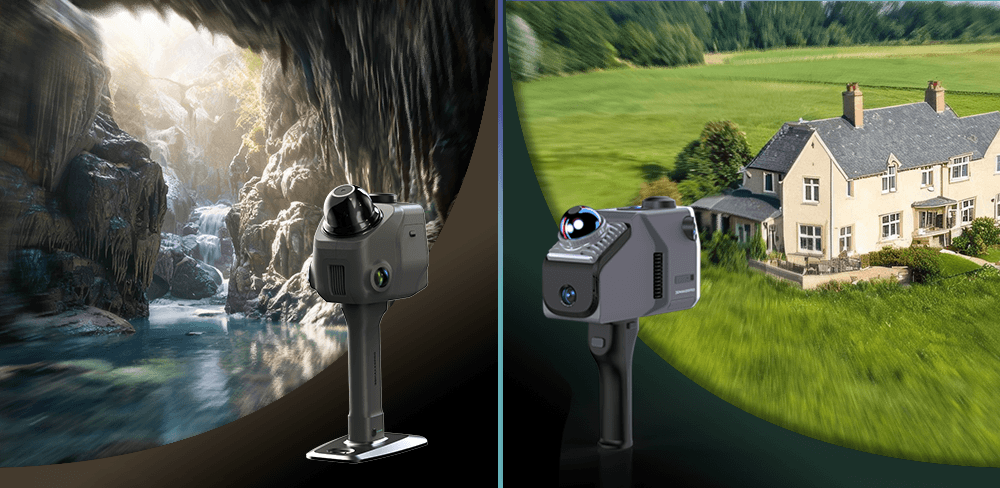
Engineers and facility managers increasingly rely on digital twins to inspect tunnels, bridges, and industrial plants. By combining Gaussian Splatting with spatial measurement data, these environments can be digitized with incredible context. A portable LiDAR scanner device is making this easier than ever:
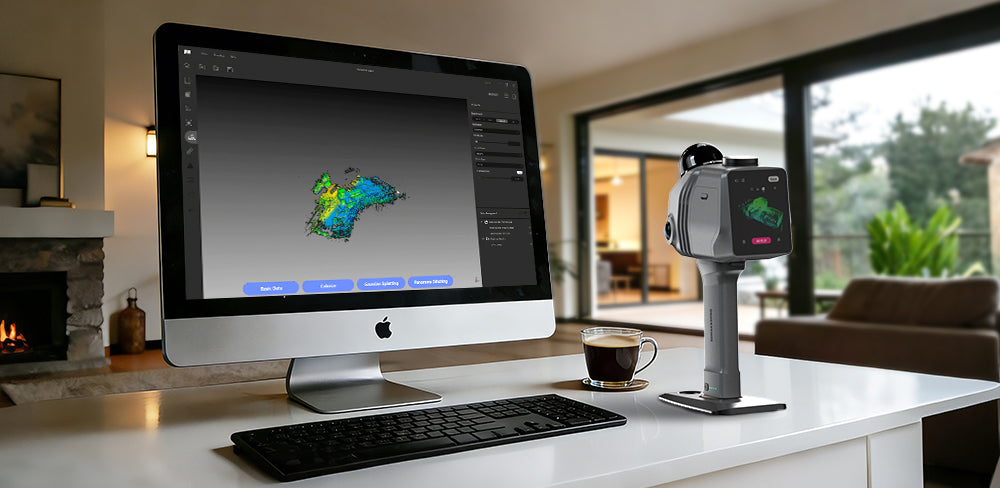
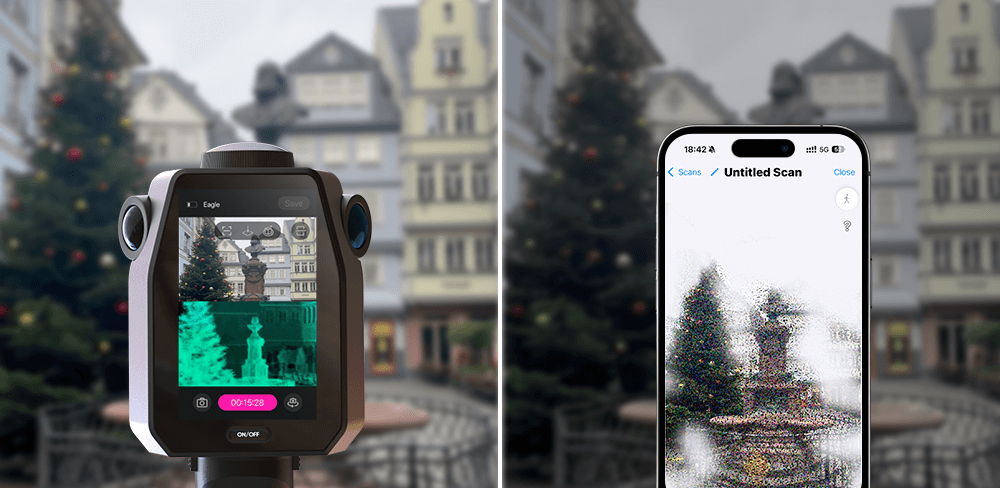
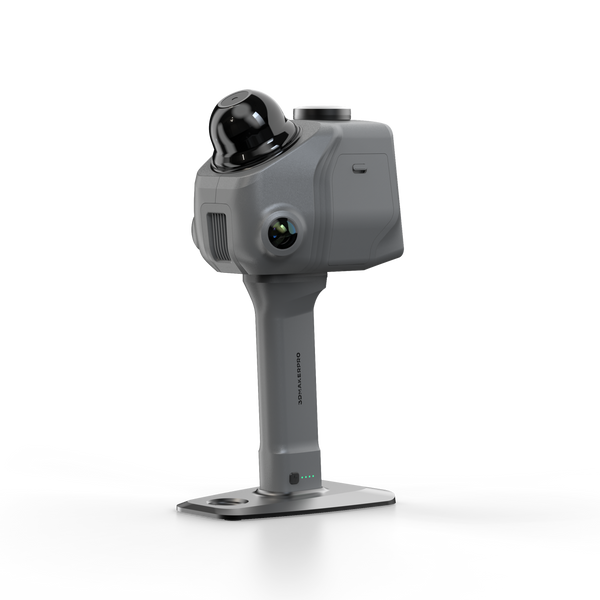
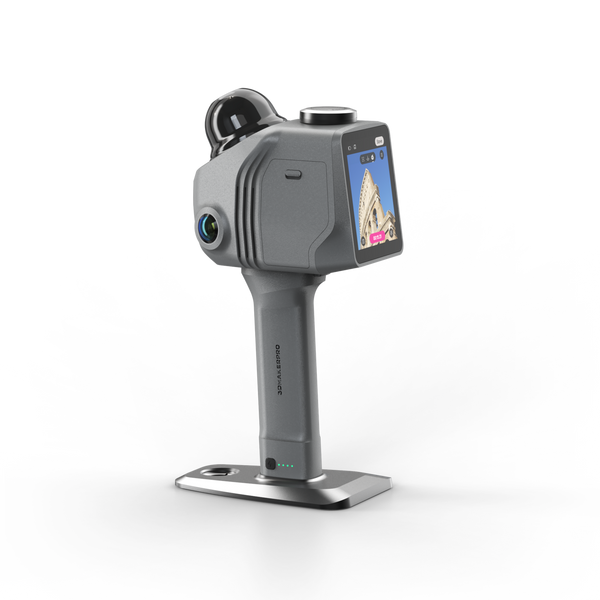
The 3DMakerpro Raven offers a compact handheld design with up to 2 cm accuracy, perfect for indoor mapping and infrastructure inspection. The 3DMakerpro Eagle extends this capability with a 140 m scanning range and 8K panoramic imaging, capturing the vast spatial data and rich visual detail required to build massive outdoor Gaussian scenes.

2. Architecture and Real Estate
Virtual property tours usually rely on static 360-degree photos or cartoonish 3D models. Gaussian Splatting creates immersive experiences where buyers and architects can freely walk through a space. The technique beautifully preserves exact lighting conditions, window reflections, and material textures.

3. Film Production and Virtual Sets
Hollywood studios are digitizing real-world locations to create virtual sets. Gaussian Splatting allows directors to virtually scout locations, test camera movements, and evaluate lighting in real time. If a scene requires a complex environment—like a dense, leafy forest—Gaussian Splatting renders it effortlessly.

4. Cultural Heritage Preservation
Historical landmarks and museum collections face constant threats from aging and natural disasters. Preservation teams use high-resolution imagery alongside spatial data from a lidar scanner device to create permanent digital archives. Devices like the Raven, equipped with a 12 MP camera and color point cloud support, ensure that the true visual soul of an artifact is preserved for future generations.

5. E-Commerce and Robotics
High-value goods (like furniture, cars, or luxury items) can be digitized into photorealistic splats, allowing customers to interact with them flawlessly online. Additionally, future autonomous robots could use Gaussian representations to navigate visually complex environments, understanding transparent objects and reflective surfaces better than standard geometric sensors allow.

Looking Toward a Spatial Future
While today Gaussian Splatting is incredibly powerful for recreating static environments, its true potential is just beginning to unfold. We are rapidly moving toward a future of 4D dynamic splatting, capturing not just still buildings, but moving crowds, live sports, and real-time human performances. As augmented and virtual reality (AR/VR) devices become mainstream, this technology will serve as the visual engine for the Spatial Web. Soon, instead of scrolling through flat 2D web pages, you could put on a pair of glasses and physically walk through a perfectly reconstructed digital twin of a Tokyo street or a remote museum, feeling as though you are truly there.
To build this immersive spatial future, the world needs accessible, high-precision capture tools to bridge physical reality and digital space. A powerful lidar scanner device like the 3DMakerpro Raven or Eagle is already laying this foundation. As LiDAR and panoramic imaging hardware continue to evolve alongside rendering algorithms, scanning the real world will soon become as effortless as recording a video—empowering creators, engineers, and everyday users to build, share, and step into the breathtaking digital twins of tomorrow.
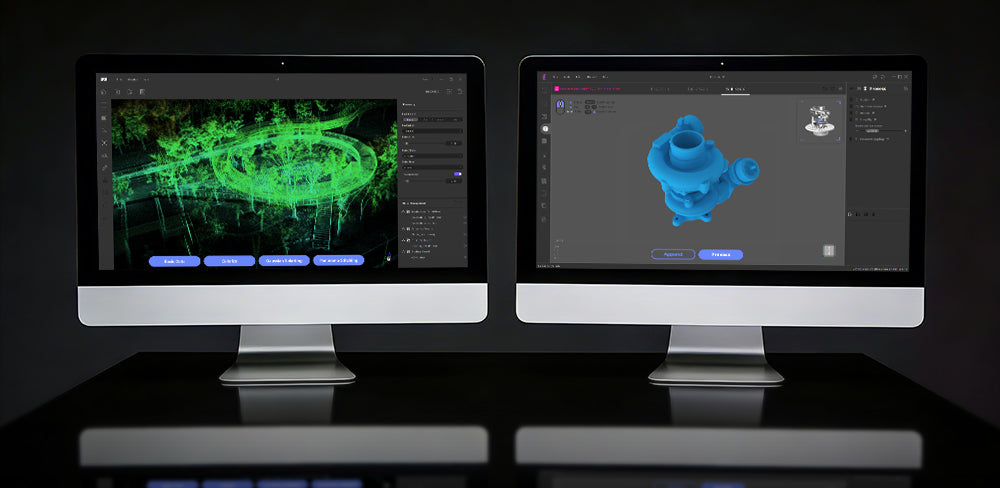
Featured collection
LiDAR scanner
Raven LiDAR Scanner


Battery Grip
LiDAR scanner