Content
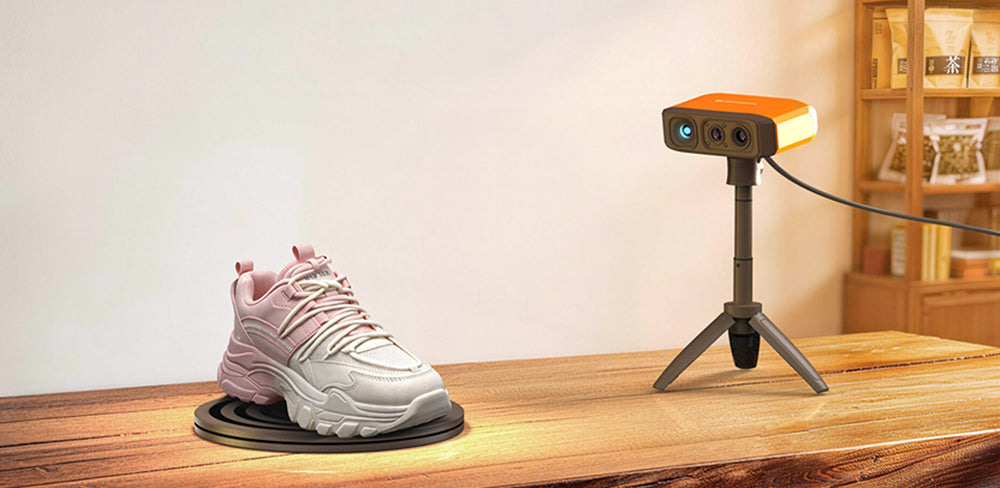
Shoes are more than everyday necessities. They reflect personal style, movement, memories, and creativity. As digital technology continues to evolve, more physical objects are being transformed into editable 3D assets, and footwear is becoming part of that transition. With beginner-friendly devices like the Fox 3D Scanner, creating digital shoe models is now more accessible for hobbyists, designers, creators, and online businesses alike. From preserving favorite sneakers to exploring custom footwear design, structured light scanning is opening new possibilities for how shoes can exist in both physical and digital spaces.
Why Shoes Work So Well for Structured Light Scanning
Compared with flat or featureless objects, shoes naturally contain rich geometric details that help structured light scanners maintain stable tracking during scanning. Curved midsoles, layered fabrics, stitching lines, logos, laces, and outsole patterns all provide strong visual information for accurate reconstruction. This allows structured light technology to capture both shape and texture efficiently, even on everyday sneakers.
Shoes are also more approachable for beginners than many industrial or large-scale objects. Their manageable size and recognizable structure make the scanning process easier to understand, while still producing visually impressive results. For users exploring 3D scanning for the first time, footwear offers a practical and rewarding starting point.
Beyond the scanning process itself, footwear digitization also connects naturally with creative workflows. Once scanned, shoe models can be imported into software such as Blender or Cinema 4D for rendering, customization, animation, or concept development. What begins as a simple scanning project can gradually become an entry point into the wider world of 3D creation.

Preserve Your Favorite Shoes in Digital Form
For sneaker enthusiasts and collectors, certain shoes hold emotional value far beyond their original purpose. A pair of sneakers might represent a memorable trip, a personal milestone, or years of daily wear. Unfortunately, physical materials naturally age over time, causing colors to fade and surfaces to deteriorate.
3D scanning provides a way to preserve those details digitally. By using the Fox 3D Scanner, users can transform physical footwear into editable 3D models that can be archived, shared, or revisited later. The scanner’s NIR light source and Mono texture capture capabilities help record surface geometry and texture details more effectively, even on materials that may be difficult for traditional visual tracking. Instead of relying only on photos, digital shoe models preserve the actual geometry and structure of the object, creating a more complete digital memory.
For many beginners, this also becomes an introduction to the wider world of 3D creation. A simple shoe-scanning project can gradually lead to interests in rendering, animation, customization, or even 3D printing.
Create Interactive Footwear Displays for Online Stores
As e-commerce becomes more visual and interactive, footwear brands and independent sellers are exploring better ways to showcase products online. Traditional product photography can display appearance, but it often struggles to fully communicate shape, depth, and construction details.
3D-scanned shoe models offer a more immersive viewing experience. Customers can examine sole patterns, stitching details, material layering, and silhouettes from multiple angles instead of relying on a limited number of static images. With up to 0.07mm accuracy, the Fox 3D Scanner is capable of capturing fine footwear details that are important for high-quality digital presentation.
For smaller businesses, structured light scanning creates new opportunities to build digital catalogs, virtual showrooms, or interactive product pages without requiring large-scale production resources. As AR and virtual retail continue to develop, accurate footwear digitization may become increasingly important for online product presentation.

Explore DIY Footwear Design and Customization
Shoe digitization is not only useful for preservation and product display — it also creates opportunities for experimentation and creative design.
Designers and hobbyists can scan existing footwear and use the digital model as a foundation for customization projects. Midsole shapes, surface patterns, accessories, and visual concepts can all be modified digitally before moving into physical production. This workflow allows creators to test ideas more efficiently without rebuilding every model from scratch.
Once scanned, footwear models can be exported in formats such as OBJ, STL, PLY, and ASC, allowing them to integrate into a wide range of 3D workflows. These models can then be imported into programs such as Blender, Autodesk Fusion, or Cinema 4D for further editing, rendering, visualization, or reverse engineering projects.
Rather than replacing creativity, 3D scanning helps accelerate the design process and gives creators a faster starting point for experimentation.
Could 3D Scanning Become as Common as Smartphone Photography?
Not long ago, digital photography was considered specialized technology. Today, cameras are part of everyday life, used constantly to document experiences and share ideas online.
3D scanning may gradually follow a similar path.
As virtual environments, digital fashion, gaming assets, and interactive e-commerce continue to grow, more real-world objects are being transformed into digital content. In the future, creating a 3D model of a favorite pair of shoes may feel as natural as taking a photo.
Accessible devices like the Fox 3D Scanner are helping lower the barrier for newcomers entering this space. Paired with beginner-friendly software like JM Studio, users can complete basic scanning, alignment, and model processing workflows in a more approachable and easy-to-understand environment. Instead of requiring industrial workflows or advanced technical knowledge, modern structured light scanning is becoming increasingly accessible for creators, students, hobbyists, and small businesses alike.
Final Thoughts
The world around us is gradually becoming more digital, and 3D scanning is helping bridge the gap between physical objects and digital creativity. Shoes are a perfect example of how everyday items can become editable, interactive, and preservable digital assets.
Whether you want to preserve meaningful sneakers, create immersive online product displays, or explore custom footwear design, structured light scanning offers an accessible way to begin that journey.
With its beginner-friendly workflow and approachable design, the Fox 3D Scanner provides an easy starting point for anyone interested in bringing footwear into the digital world.
Featured collection
Entry-levelMedium-format
Save $37.00



Smart Grip