



Content

What is a Digital Twin?
A Digital Twin is far more than just a 3D model; it is a dynamic, "1:1" digital reflection of a physical space. Think of it as a bridge between the tangible world and digital intelligence. By capturing the precise geometry of a room, office, or building, a digital twin allows you to explore and interact with a real-world environment through a screen, as if you were physically standing there.
With the advent of the 3DMakerpro Raven Lidar Scanner, the technology to create these digital replicas has moved from high-end industrial labs into the hands of everyday creators. As a portable LiDAR-based spatial scanner, Raven makes it possible for anyone to digitize their surroundings with professional ease, turning physical environments into versatile digital assets.

Why Digital Twins Matter: The Shift to Spatial Intelligence
The true value of a digital twin lies in its ability to eliminate the barriers of time and distance. In a professional context, it offers “spatial intelligence”—the power to revisit a site virtually to verify measurements or plan a renovation without the cost or time of repeated travel. This digital continuity ensures that everyone, from architects to clients, is working from the same accurate data.
Beyond efficiency, digital twins offer a way to "archive" reality. Whether you are documenting a construction site at a specific milestone for insurance purposes or preserving the memory of a cherished historical building, a digital twin provides a permanent, measurable record. It transforms a physical space into a living data resource that remains accessible and actionable long after the initial scan is complete.
How Raven Powers the Digital Twin Workflow
The Raven is specifically engineered to make the creation of these digital environments intuitive, providing a seamless workflow from physical capture to digital application:
a) Rapid, Dynamic Space Digitization
When you walk into a room, Raven Spatial Scanner utilizes advanced LiDAR technology to capture the structural layout of an environment in real-time at 150,000 points per second. But beyond the sheer speed, it’s about the fluidity of the process. Instead of setting up static tripods and waiting, you simply walk through the space naturally. The scanner actively maps the environment as you move, ensuring every alcove, corridor, and ceiling contour is recorded. This dynamic approach effectively replaces traditional manual measurements, drastically reducing the time spent on-site and minimizing disruption to ongoing operations in the physical space.
b) Building Measurable Environments
A visual model is only a picture, but a digital twin is a mathematical reality. The data captured by Raven is a structural map with professional-grade precision, achieving an accuracy of 2cm at a 10-meter distance. This transforms a captured room into a fully measurable, CAD-ready environment. Professionals can extract precise floor plans, calculate room volumes, verify the plumb lines of walls, or ensure clearance for large equipment installations. This level of structural integrity allows users to trust digital dimensions for real-world planning, effectively eliminating the dreaded "return trip" to double-check a forgotten measurement.

c) Agile On-Site Operation and Endurance
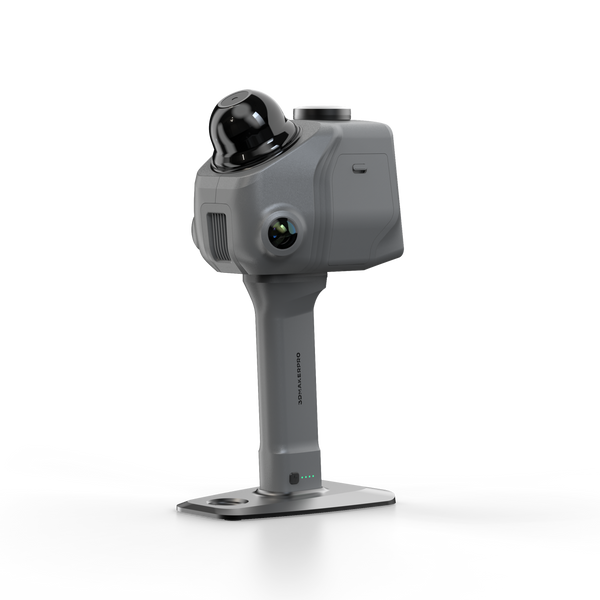
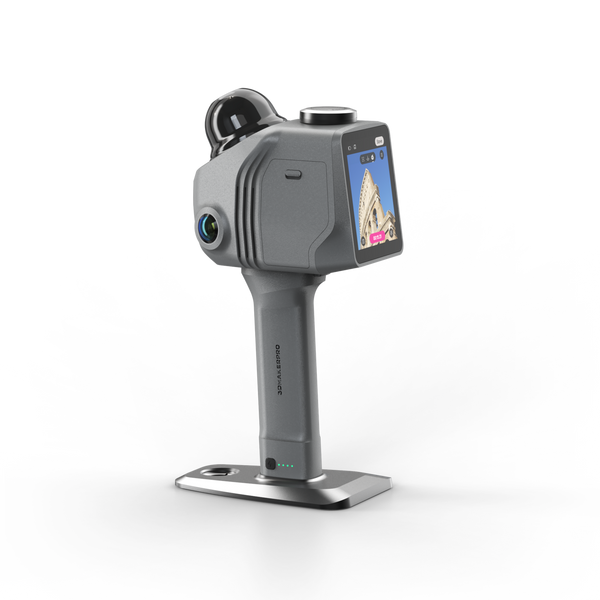
The true bottleneck of spatial capture has traditionally been the cumbersome nature of the equipment. Designed for active, unhindered work, the Raven weighs only 1.1kg. This ultra-lightweight form factor means operators can easily navigate tight stairwells, crawl spaces, or complex industrial layouts without fatigue. Furthermore, its power system utilizes a swappable battery handle. This uninterrupted power supply is critical when digitizing massive or complex layouts, ensuring the workflow isn't dictated by the nearest power outlet and allowing for true freedom of movement across an entire workday.
d) Professional Data Integration (From Scan to Software)
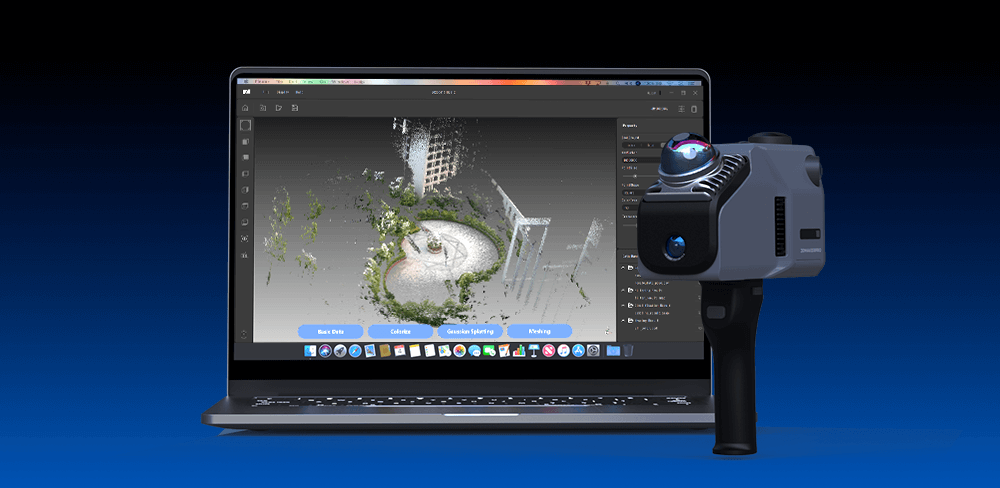
The lifespan of a digital twin truly begins once the scanning stops. After the raw data is processed in 3DMakerpro’s dedicated Ray Studio software to ensure clean and manageable results, it can be exported into universal, industry-standard formats like LAS, LAZ, PLY, and OBJ. This ensures the digital twin isn't locked into a closed ecosystem. Instead, it seamlessly bridges into professional third-party platforms like CloudCompare, Leica Cyclone, FARO Scene, and Trimble RealWorks. Architects and designers can even import the data directly into AutoCAD and Revit, using the Raven's accurate "as-built" conditions as the undeniable baseline for their BIM workflows.

e) Immersive Visual Assets & Gaussian Splatting
For those seeking high-end visual realism, Raven supports cutting-edge workflows like Gaussian Splatting. By combining Raven’s spatial accuracy with immersive textures, creators can build hyper-realistic virtual tours or digital sets for film and gaming that feel indistinguishable from reality, providing a truly "first-person" experience for digital visitors.
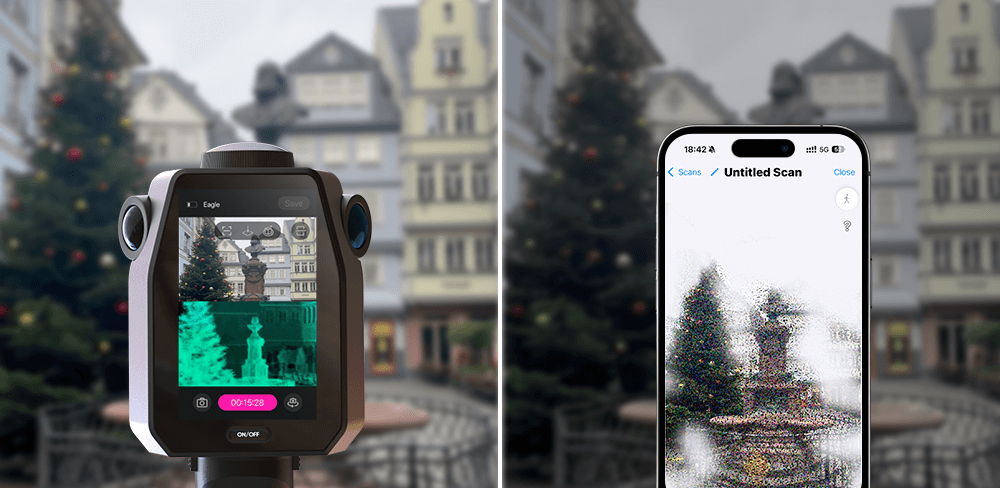
(Note: For users requiring even larger-scale industrial range and coverage, the 3DMakerpro Eagle Lidar Scanner also provides a high-performance solution for creating expansive digital twins.)
A Future for Everyone: Digital Twins in Every Hand
The era of digital twins is no longer a niche for elite engineers or large enterprises. Technology like the 3DMakerpro Raven Lidar Scanner is democratizing spatial capture, making it an everyday utility for interior designers, real estate agents, facility managers, and even hobbyists.
In our working lives, digital twins mean fewer errors, reduced operational costs, and better remote collaboration. In our personal lives, they allow us to preserve our history—digitizing our childhood homes or documenting our own creative spaces with absolute precision. As the physical and digital worlds increasingly intertwine, the ability to digitize our world is becoming as simple as taking a photograph—turning the spaces around us into a canvas for infinite digital possibility.

Featured collection
LiDAR scanner
Raven LiDAR Scanner


Battery Grip


