Content
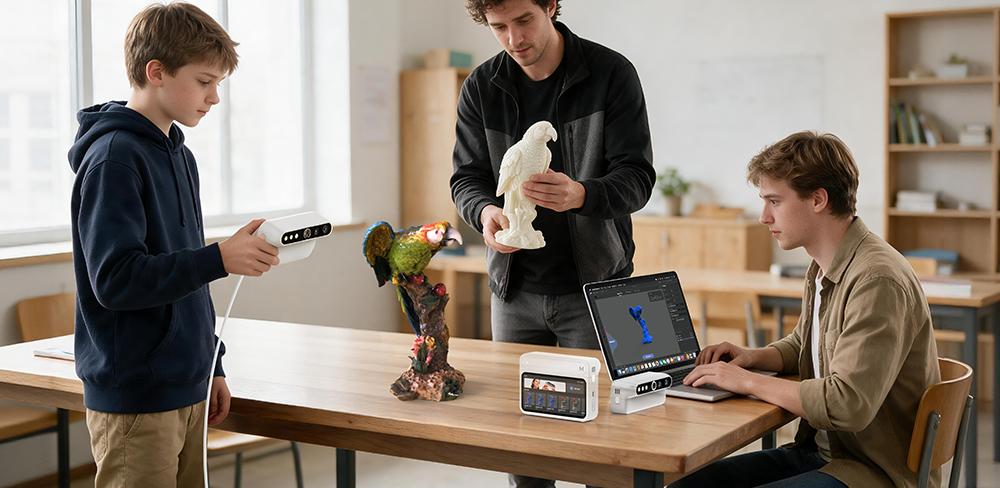
3D scanning is no longer limited to professional design studios, engineering labs, or manufacturing workflows. As the technology becomes more accessible, it is also entering homes, classrooms, maker spaces, and personal learning environments, giving people a more hands-on way to observe and understand the physical world.
Taking Turtle as an example, this article looks at 3D scanning in education as a tool for different stages of growth, from childhood curiosity and school-based learning to independent modeling skills and a more practical, creative way of learning.

Childhood: Exploring Shapes, Outlines, and Curiosity
Learning Through Everyday Objects
For children, learning often begins with touch, observation, and curiosity. A toy, a handmade craft, a leaf, a stone, or a clay figure may look ordinary to adults, but to a child, each object has a shape worth exploring. With 3D scanning, these familiar objects can become digital models that children can rotate, enlarge, and view from different angles.
At this stage, 3D scanning does not need to focus on complex modeling skills. Its real value is helping children understand basic forms: outlines, curves, edges, volume, front and back, top and bottom. Compared with simply looking at a picture or watching a video, a scanned 3D model gives children a more complete way to observe the objects around them.
Understanding Shapes and Building Spatial Awareness
For example, when a child scans a toy car, they can see how the wheels, body, roof, and base connect to form a complete object. When they scan a handmade clay animal, they may notice whether the body is balanced, whether the shape is smooth, or whether one side looks different from the other.
These small discoveries help build early spatial awareness. Children begin to understand that objects are not only flat images, but three-dimensional forms with different sides, surfaces, and structures. This makes 3D scanning a simple but powerful way to introduce shape, proportion, and observation from an early age.
Parent-Child Learning and 3D Printing
3D scanning can also create a natural opportunity for parent-child learning. Parents and children can choose an object together, scan it together, and compare the digital model with the real object. During this process, parents can guide children to ask simple questions: What shape is this? Which part is higher? Where is the edge? What changes when we look from another side?
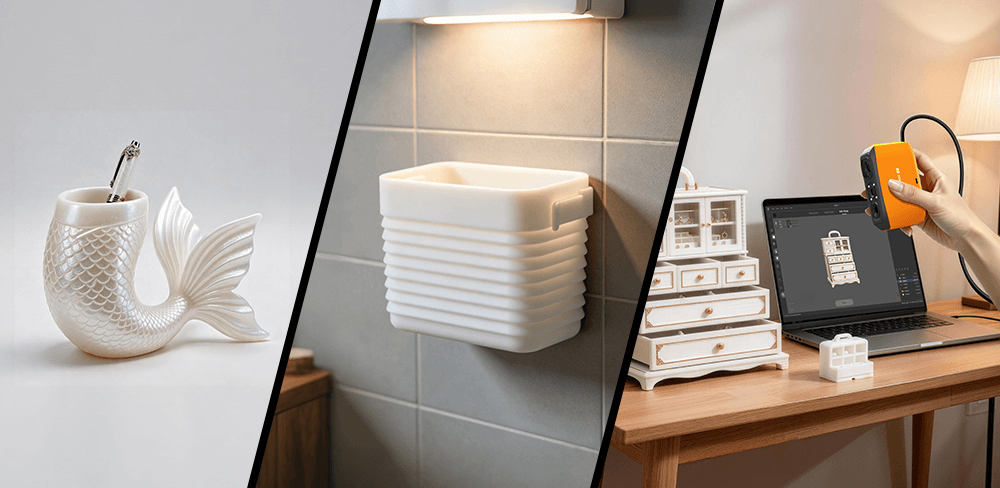
If the scanned model is later 3D printed, the experience becomes even more memorable. A child can scan a small craft, see it become a digital model, and then hold a printed version in their hands. For families looking for a 3D scanner for 3D printing, this creates a complete cycle from physical object to digital model and back to physical creation.
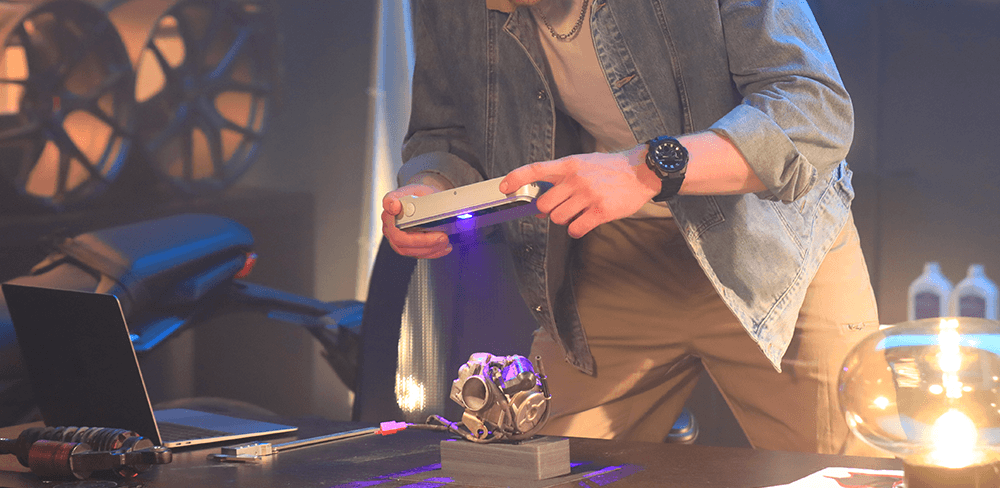
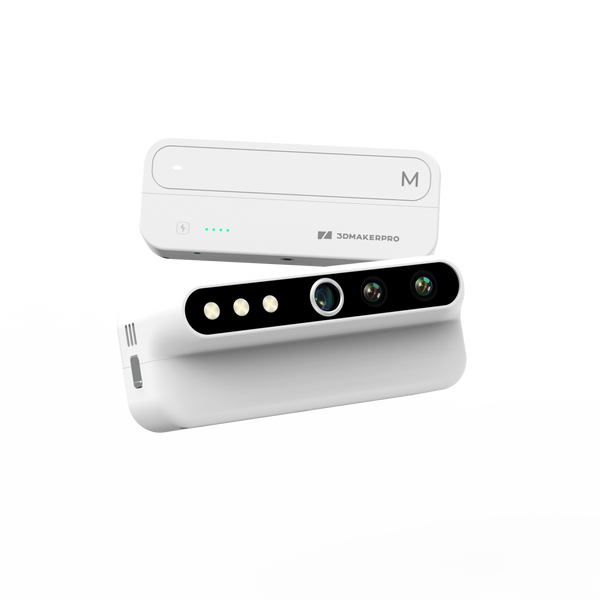
A flexible scanner like Turtle can support this kind of family learning because children may scan objects of different sizes, from small crafts and toys to larger handmade projects. Turtle uses swappable S, M, and L modules, with the S module offering a Single capture range of 160 x 120 mm for small, detailed objects. This makes it suitable for toys, crafts, miniatures, and other objects children may want to explore at home.

Youth: Making School Education More Visual and Hands-On
From Playful Exploration to Structured Learning
As children grow into school-age learners, 3D scanning can move from playful exploration into structured education. In classrooms, students often need to understand not only what an object looks like, but also how it is formed, how its parts connect, and why its structure works.
A scanned 3D model gives them a clearer way to study these questions because they can observe the object from every angle instead of relying only on flat images or textbook diagrams. This is especially useful in subjects that depend on space, form, structure, and detail.
Updating the Way Teachers Teach
For teachers, 3D scanning can update the way complex ideas are presented. A sculpture, a mechanical part, a product shell, a plant sample, or a historical replica can be scanned and turned into a digital model for classroom use. Instead of explaining structure through a single 2D image, teachers can guide students to rotate the model, zoom in on details, and compare different views.
This makes lessons more visual, interactive, and easier to connect with real-world objects. It also gives teachers a more flexible way to prepare teaching materials. A real object in the classroom can become a digital teaching model, and that model can be reused, shared, discussed, modified, or printed for future lessons. In this way, a 3D scanner for education can help teachers turn physical teaching materials into reusable digital resources.
Learning Construction and Composition
For students, this kind of learning is especially helpful when studying construction and composition. In art and design classes, they can examine volume, balance, surface, and proportion. In engineering or maker education, they can study holes, edges, thickness, assembly points, and functional shapes. In science or history lessons, they can observe specimens or replicas in a way that feels closer to handling the real object.
Compared with 2D materials, 3D models make spatial relationships much easier to understand. Students can see how different parts relate to one another, how an object is supported, where its details are located, and how its shape changes from one angle to another. This helps them move from simply recognizing an object to understanding how it is constructed.
Scanning, Modeling, and Printing Classroom Results
3D printing can also turn scanned models into physical classroom outcomes. After scanning an object, students can bring the model into software, repair or modify it, and then print a new version. This gives the class a complete workflow: observe, scan, model, improve, and create.
The final result is not only something students see on screen, but something they can hold, compare, present, and refine. For school education, this makes learning more hands-on and helps students build a stronger connection between theory, digital tools, and real-world creation.
In this kind of workflow, choosing a 3D scanner for 3D printing matters. Turtle supports OBJ, STL, PLY, and ASC output formats, which makes scanned models easier to use in modeling, mesh processing, and 3D printing preparation. For classroom projects, this means students can scan real objects and continue working with them in a practical digital creation process.
Turtle’s module options also make it adaptable for school use. The M module supports a Single capture range of 240 x 180 mm, while the L module supports a Single capture range of 650 x 450 mm. This gives teachers more freedom to scan different teaching materials, from small samples and mechanical parts to larger models, furniture components, or project prototypes.

Adulthood: Developing Independent Modeling and Creative Skills
Turning 3D Scanning into a Practical Skill
In adulthood, 3D scanning can become more than an educational aid. It can develop into a practical skill for personal projects, creative work, and professional applications. Adults may use 3D scanning for product design, repair, digital modeling, 3D printing, artwork preservation, prototype development, or object documentation.
At this stage, the goal is no longer only to observe objects, but to use scanned data as a foundation for independent creation. Adults can decide what to scan, how to process the model, and how to apply it in real projects. For many learners, 3D scanning in education continues beyond school because it becomes part of lifelong skill development.
From Real Objects to Independent Modeling
For people who are learning 3D modeling, scanning can make the process more approachable. Instead of building every shape from scratch, they can scan a real object and use the digital model as a reference or starting point. The model can then be cleaned, repaired, resized, reshaped, or rebuilt in modeling software.
This helps beginners understand real-world geometry while giving experienced users a faster way to capture accurate forms. It also makes self-directed learning easier because the learner is not only following a tutorial, but working with objects from their own environment.
Repair, Prototyping, and Creative Production
The practical value becomes clear in everyday scenarios. A maker can scan a small broken part, adjust the model, and print a replacement. An artist can scan a handmade sculpture, preserve it digitally, and produce copies in different sizes. A designer can scan a prototype, analyze its proportions, and continue refining the form.
In each case, 3D scanning connects physical objects with digital workflows, making it easier to turn ideas into usable results. For adults who want a 3D scanner for 3D printing, this connection is especially important: the scanner does not only capture an object, but also helps create a model that can be edited, tested, and printed.
A Tool for Lifelong Learning
This is why 3D scanning can support lifelong learning. It gives adults one more way to explore, model, modify, and create. Whether used for hobbies, career development, or personal projects, it helps people build a stronger relationship with digital tools and expands what they can do with the objects around them.
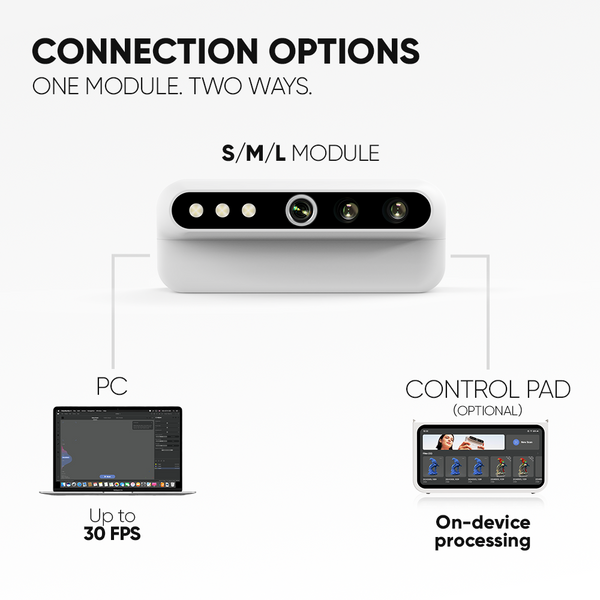
Turtle’s each module supports 10 fps standalone scanning and up to 30 fps when connected to a PC, giving adult learners options for detailed objects, everyday objects, and larger project work.
For users who want a more independent workflow, Turtle’s optional Control Pad provides a 6.4-inch 2K AMOLED screen, 16 GB RAM, 256 GB SSD storage, Wi-Fi 5, USB-C, and a 10,000 mAh battery with approximately 2 hours of use. This allows scanning, processing, and exporting without always relying on a laptop, which can be helpful for home studios, maker spaces, and mobile learning environments.

3D Scanning and the Innovation of Education
From Passive Viewing to Active Creation
The educational value of 3D scanning is not only about adding a new device to a classroom or home. It changes the way learning can happen. Instead of beginning only with textbook content, learners can begin with a real object. They can observe it, scan it, study the model, identify problems, make changes, and create a new result.
This moves learning from passive viewing to active creation. A student is no longer only watching a teacher explain an object on a screen. A child is no longer only looking at a picture. An adult learner is no longer only following a fixed modeling exercise. They can all take part in the process of turning something physical into something digital and creative.
Connecting Families, Classrooms, and Makers
For teachers, 3D scanning can improve teaching quality by making abstract concepts easier to show. A lesson about structure, proportion, surface, or form becomes more concrete when students can examine a digital model from every angle. Teachers can also build their own teaching materials from real objects, making classes more relevant and interactive.
For families, 3D scanning opens a new type of parent-child learning. Parents can guide children to observe objects, ask questions, compare shapes, and preserve meaningful creations as digital models or printed objects. For makers and adult learners, it offers a practical path from real-world objects to digital modeling and 3D printing.
A More Practical Way to Learn
This is the broader innovation of 3D scanning in education. It connects observation, digital modeling, and physical creation in one process. Learners can see an object, understand it, edit it, and print it. That process makes knowledge more visible, more hands-on, and easier to connect with real life.
As 3D scanning becomes more accessible, it can help education move beyond flat materials and passive lessons. For families, schools, and maker spaces, a 3D scanner for education is not only a teaching device, but also a bridge between real-world exploration and digital creation.
Bringing Real Objects into Lifelong Learning
3D scanning is suitable for learners of all ages. In childhood, it helps children explore shapes, outlines, and spatial relationships while encouraging curiosity and parent-child interaction. In youth, it makes school education more visual and hands-on, helping students understand structure, composition, and three-dimensional form. In adulthood, it becomes a practical skill for independent modeling, creative work, repair, prototyping, and digital production.
With a flexible 3D scanner for 3D printing like Turtle, families, classrooms, and individual learners can bring real-world objects into digital learning more easily. From early curiosity to school education and lifelong skill development, 3D scanning can become a practical tool for learning at every stage of life.
Featured collection
Early bridNEW
Save $104.85
Turtle Series 3D Scanner
Turntable for Lynx,Plus