Content
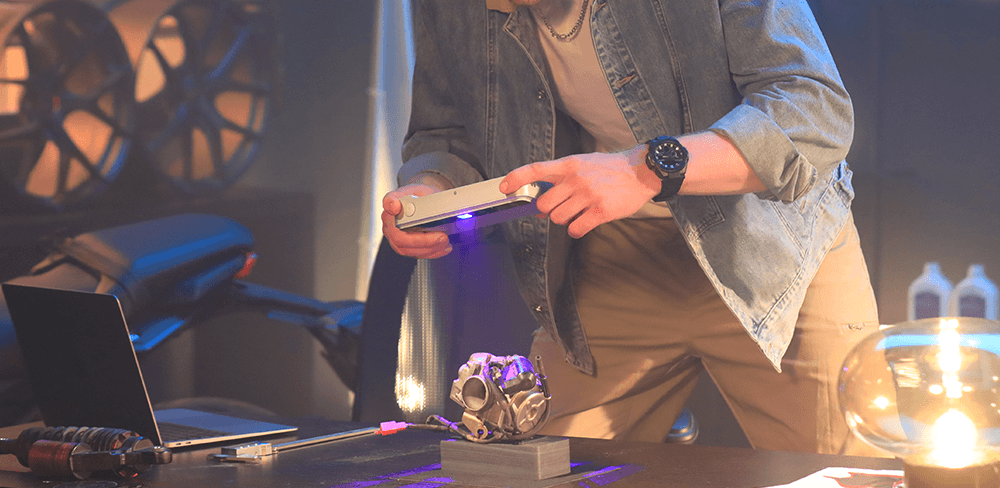
Wireless technology has transformed almost every device we use. From headphones and keyboards to smartphones and home appliances, cables are gradually disappearing because people value flexibility as much as performance. The same shift is now happening in 3D scanning. A modern point cloud scanner is no longer expected to be permanently connected to a computer to deliver professional results. Instead, users want the freedom to scan anywhere, review data instantly, and continue working without building an entire workstation around the device. The 3DMakerpro Toucan represents this new direction. As a standalone point cloud scanner powered by advanced phase-shifting technology, it combines professional accuracy with a completely wireless workflow, making 3D scanning more natural than ever before.

The Future of 3D Scanning Isn't About Accuracy Alone
For years, manufacturers competed almost entirely on technical specifications. Every new generation of scanners promised higher accuracy, finer resolution, or faster capture speeds. Those improvements certainly mattered, especially for engineering, manufacturing, and reverse engineering applications.
However, as the hardware matured, another challenge became increasingly obvious. The scanning process itself was often more restrictive than the scanner's performance.
Traditional workflows usually required users to connect the scanner to a laptop through a USB cable, find a suitable place for the computer, manage external power sources, and constantly pay attention to cable movement while walking around an object. Even experienced users gradually accepted these inconveniences as part of professional 3D scanning.
But should they be?
The history of technology suggests otherwise. Smartphones no longer require wired synchronization. Cameras automatically back up photos to the cloud. Wireless headphones have become the default choice for millions of users. As devices become more powerful internally, they rely less on external hardware. There is no reason why a professional point cloud scanner should remain tied to a desk when nearly every other creative tool has become increasingly independent.
This changing expectation is what makes wireless scanning more than just another product feature. It represents a new way of thinking about how digital models should be captured.
Wireless Changes the Entire Workflow
Many people assume wireless scanning simply means removing one cable. In reality, it changes almost every stage of a scanning project.
Consider a typical workflow for scanning a sculpture, a vehicle component, or a piece of furniture. Before scanning even begins, the operator needs to position a laptop, connect the scanner, launch the software, ensure the cable has enough length, and keep both devices powered throughout the session. During scanning, attention is divided between capturing the object and making sure the cable does not become tangled or disconnected.
These interruptions may seem minor individually, but together they reduce efficiency and break concentration.
A wireless workflow removes many of these distractions. Instead of thinking about where the computer should be placed, users can focus entirely on the object itself. They naturally move around complex surfaces, adjust their viewing angles more freely, and verify coverage immediately without relocating equipment.
The result is not only a more comfortable experience but often a better scan. When operators can concentrate on geometry instead of hardware, they are less likely to miss difficult areas or leave gaps in the final model. In many situations, the freedom provided by a wireless point cloud scanner contributes directly to higher-quality point cloud data.
Why Standalone Processing Matters
Wireless scanning would mean very little if every project still required a powerful computer for processing. The real breakthrough comes from integrating scanning, computing, storage, and visualization into one device.
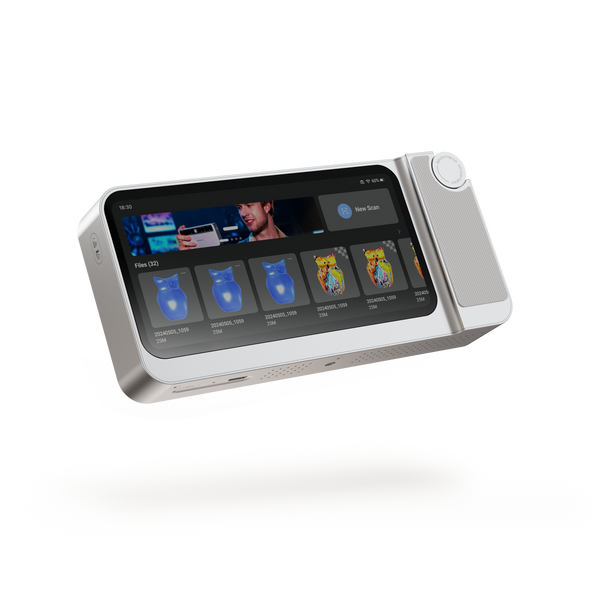
This is exactly the philosophy behind the 3DMakerpro Toucan. Rather than acting as a sensor that depends on a connected PC, Toucan functions as a complete scanning platform. Equipped with an 8-core processor, a Mali-G52 GPU, 32 GB of memory, 256 GB of internal storage, and a built-in touchscreen, it allows users to scan, preview, inspect, and manage projects directly on the device. This independence fundamentally changes where scanning can happen.
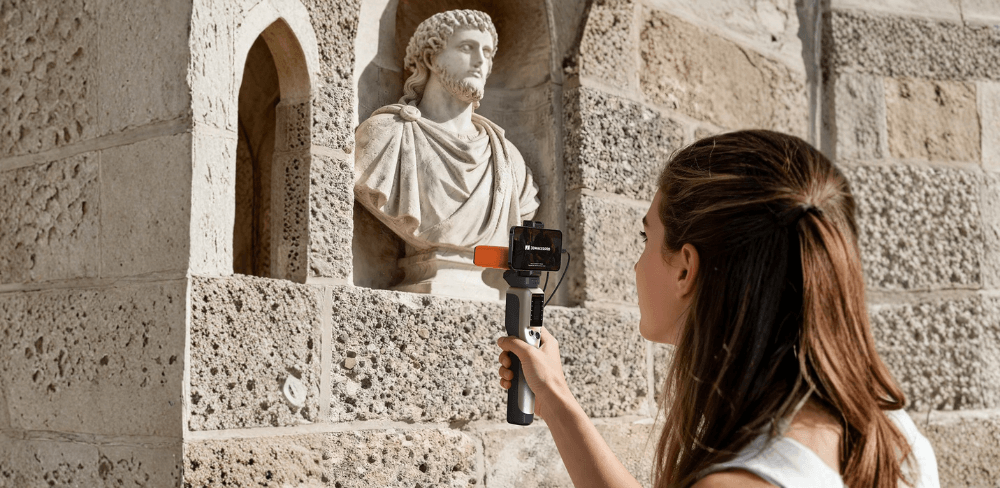
Imagine documenting machinery inside a factory, digitizing sculptures in a museum, or capturing architectural details on a construction site. Instead of transporting additional equipment or searching for a nearby workspace, the scanner itself becomes the workstation. Users can immediately review the captured geometry, identify missing areas, and continue scanning while still on location.
The difference becomes even more significant for professionals who regularly work outside the office. Mobility is no longer limited by the nearest electrical outlet or available desk. The entire scanning workflow becomes portable.

Phase-Shifting Technology Makes Wireless Practical
Removing cables should never come at the expense of scan quality. This is where Toucan stands apart. Rather than sacrificing precision for portability, it combines a fully standalone workflow with professional phase-shifting structured light technology, delivering both flexibility and accuracy.
Phase-shifting works by projecting multiple structured light patterns and analyzing their phase differences to reconstruct highly detailed geometry. Compared with simpler projection methods, it produces denser point clouds and smoother surface reconstruction, making it well suited for reverse engineering, product design, and digital archiving.
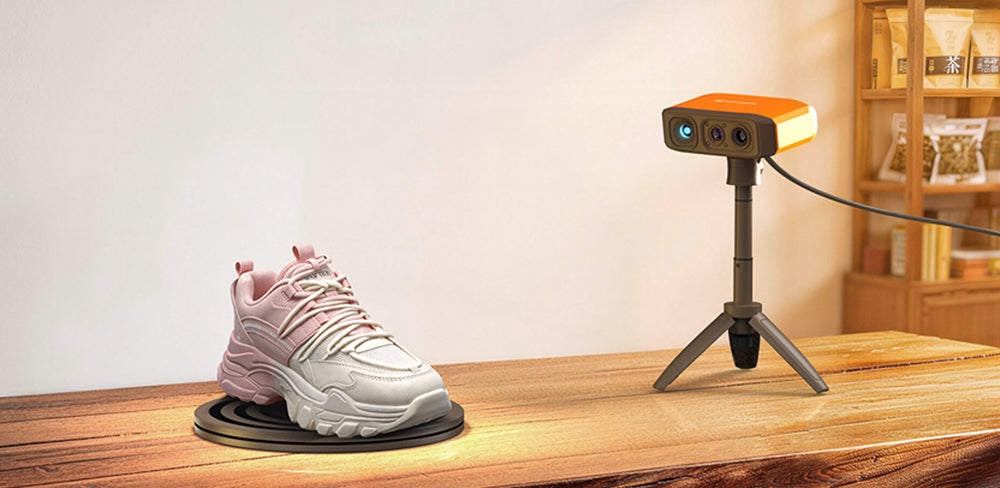
Just as importantly, Toucan's wireless design doesn't limit what you can scan. It offers Near and Far scanning modes, allowing a single device to capture objects ranging from 15 mm to 4000 mm. Whether you're digitizing a small mechanical component, a sculpture, furniture, or even a person, the workflow remains equally straightforward.
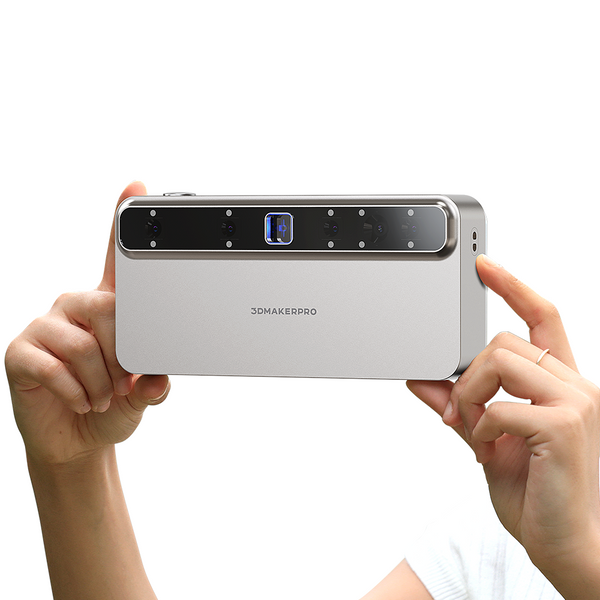
Despite its compact size, Toucan delivers professional precision with accuracy of up to ≤0.03 mm for small objects and ≤0.10 mm for larger objects. A 6600 mAh battery provides extended standalone operation, while its lightweight 735 g ergonomic design reduces fatigue during longer scanning sessions. Instead of balancing a scanner, laptop, and cables at the same time, users can simply pick up the device and move naturally around the object. Once scanning is complete, they can review, process, and refine the model directly on the device without transferring data to a computer, significantly accelerating the entire scan-to-model workflow.
This combination of mobility and performance is what makes wireless scanning truly practical. It is no longer a trade-off between convenience and capability. It is both.

The Next Generation of Point Cloud Scanners Will Feel More Like Smartphones
Technology trends rarely move backward. There was a time when people questioned whether wireless earbuds could replace wired headphones. Many believed cloud storage would never be as reliable as carrying USB drives. Wireless charging was once considered a luxury rather than a practical feature.
Today, these technologies feel completely normal because they remove friction without asking users to sacrifice performance. The same evolution is happening in 3D scanning.
Future users are unlikely to compare scanners based solely on resolution or accuracy. They will also evaluate how naturally the scanner fits into their workflow. Can it be carried anywhere? Can it process projects independently? Can it be used immediately without setting up an entire workspace?
These questions will become just as important as technical specifications because productivity is determined by the complete user experience rather than a single number on a specification sheet.
As standalone hardware continues to evolve, the expectation of what a point cloud scanner should be will inevitably change. Instead of viewing wireless capability as an optional convenience, users will begin to see it as the standard way to work.
Looking Ahead
The evolution of 3D scanning has always been driven by one goal: making it easier to turn the physical world into accurate digital models. Wireless operation is simply the next logical step. The 3DMakerpro Toucan demonstrates that professional scanning no longer has to depend on a laptop or a complicated workstation. By combining standalone computing, phase-shifting structured light technology, onboard processing, and a streamlined user experience, it allows creators to focus on the object instead of the equipment.
In the near future, connecting a scanner with a cable may feel just as outdated as plugging your phone into a computer to transfer photos. Wireless is not simply another feature of modern 3D scanners—it is the direction the entire industry is moving toward.
Featured collection
All-in-onePhase-Shifting TechPre-order
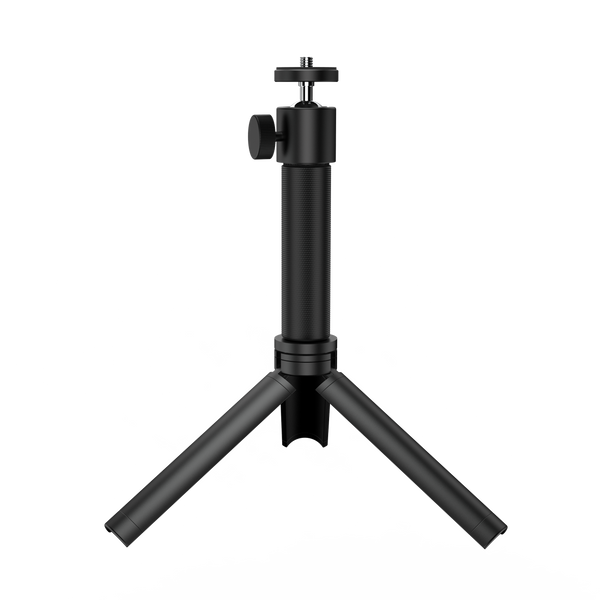
Tripod for Toucan