Content
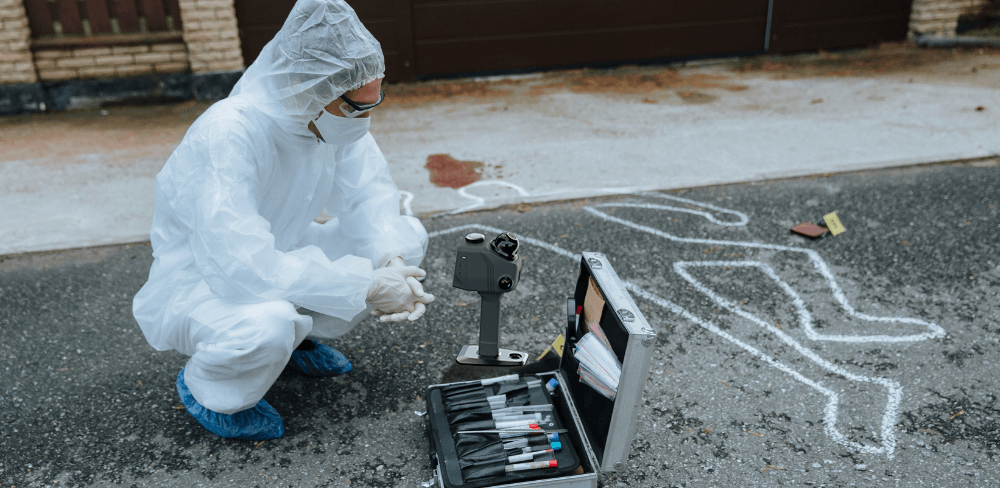
Every crime scene tells a story, but once investigators leave, that story begins to disappear. Footprints fade, vehicles are moved, weather changes outdoor environments, and indoor spaces are cleaned or rearranged. Traditional documentation methods preserve only parts of the scene, making later analysis more difficult. A modern LiDAR scanner offers a better solution by creating an accurate three-dimensional record that investigators can revisit long after the site has been released. With the 3DMakerpro Raven, crime scenes can be captured quickly and reconstructed as accurate point clouds and realistic Gaussian Splatting models, making evidence easier to analyze, review, and present.

Why Traditional Crime Scene Documentation Has Limitations
Photographs are excellent for preserving visual evidence, but they are fundamentally two-dimensional. A camera records what it sees from one angle, leaving investigators to mentally reconstruct the spatial relationship between evidence. As the complexity of a scene increases, so does the difficulty of understanding how everything fits together.
Consider an investigation involving blood stain patterns across multiple walls, vehicles after a collision, several connected rooms, or a large outdoor search area. Even hundreds of photographs may not fully communicate the distance between objects, the layout of the environment, or the visibility from different positions. Investigators often return to the scene to verify measurements or examine details that were overlooked during the initial survey. Unfortunately, by the time these questions arise, the location may already have changed.
A LiDAR scanner addresses this challenge by capturing the complete geometry of the scene. Instead of documenting evidence individually, investigators preserve the entire environment as an accurate digital twin that can be explored, measured, and analyzed from any viewpoint.

Why a LiDAR Scanner Is Better Than Traditional Documentation?
Time is one of the greatest challenges during forensic investigations. Roads must reopen, buildings need to return to normal operation, and outdoor scenes can change quickly because of weather or human activity. The faster investigators can document the environment, the better they can preserve critical evidence.
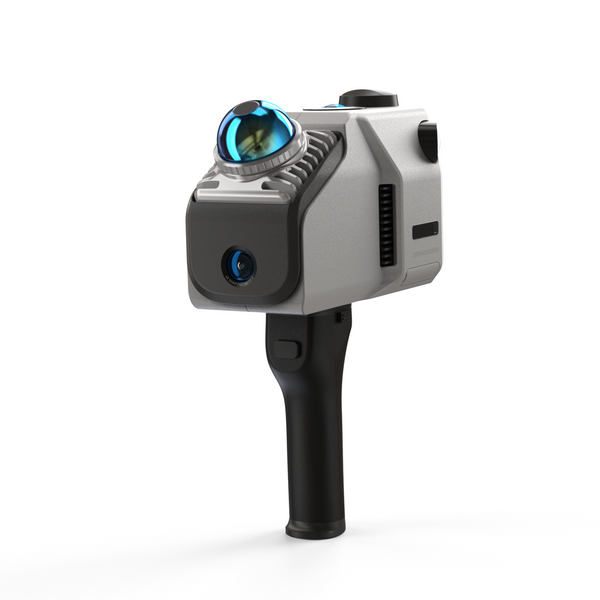
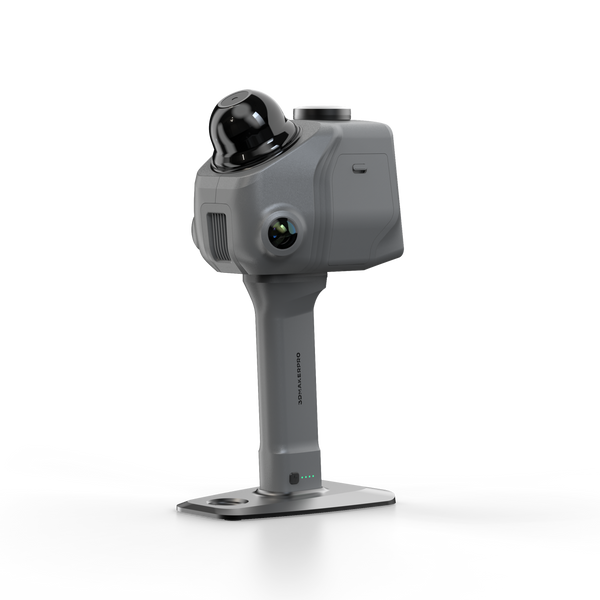
The 3DMakerpro Raven is designed for rapid large-scale spatial capture. With an effective scanning range of approximately 80 to 100 meters, it can document everything from small indoor rooms to expansive accident scenes without requiring complicated equipment. Its scanning speed of up to 150,000 points per second allows investigators to move naturally through the environment while continuously recording accurate spatial information.
Despite its professional capabilities, Raven weighs only 1.1 kg, making it comfortable to carry during extended fieldwork. The detachable 12,000 mAh battery provides up to two hours of continuous operation and can be swapped or powered externally when documenting particularly large investigation sites.
Point Clouds Preserve Geometry, Gaussian Splatting Brings the Scene Back to Life
A point cloud accurately records the shape and position of every surface, making it ideal for measurements and forensic analysis. However, not everyone involved in an investigation is familiar with interpreting millions of colored points.
This is where Gaussian Splatting provides an important advantage. During scanning, Raven captures both LiDAR data and high-quality photographs. These photographs are combined with the spatial information to reconstruct a realistic 3D representation of the original environment.
Rather than scrolling through hundreds of separate images, investigators can move naturally inside a digital version of the crime scene. Walls, furniture, vehicles, and evidence appear with realistic colors and lighting while maintaining their correct spatial positions. In many ways, Gaussian Splatting transforms the photographs collected during scanning into an immersive three-dimensional experience, making it much easier for investigators, prosecutors, and juries to understand exactly what the scene looked like.

Continue Investigating Without Returning to the Scene
Investigations rarely end after the first day. Weeks or even months later, investigators may need to answer new questions that were impossible to anticipate during the original examination. They may need to determine the distance between a suspect and a doorway, verify whether an object was visible from a particular location, measure the height of a window, or analyze whether an obstacle blocked someone’s line of sight.
Without a complete digital reconstruction, these questions often require investigators to rely on photographs, sketches, or written notes. If the original scene no longer exists, obtaining new measurements becomes impossible.
Using Raven together with RayStudio, investigators can revisit the digital scene whenever necessary. Measurements can be performed directly on the point cloud, while models can be exported in professional formats including LAS, PCD, PLY, OBJ, E57, and XYZ, allowing the data to integrate easily with other forensic analysis software and long-term digital archives.
Reliable Documentation for Complex Investigation Environments
Crime scenes vary enormously in size and complexity. Some investigations take place inside residential buildings, while others involve warehouses, industrial facilities, underground parking garages, forests, or large traffic collision sites. Every environment presents unique challenges for evidence collection.
Raven combines LiDAR, cameras, IMU, and SLAM technology to maintain stable positioning while the operator walks naturally through the area. It delivers 2 cm accuracy at 10 meters, 3 cm at 20 meters, and 5 cm at 40 meters, providing dependable spatial documentation across both indoor and outdoor environments.
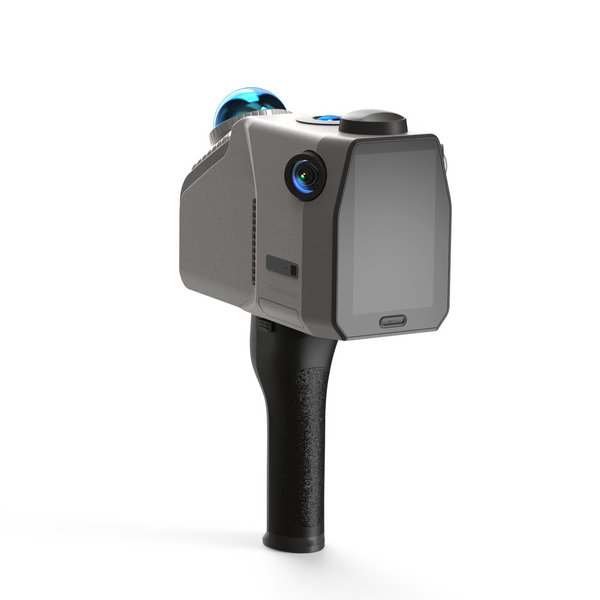
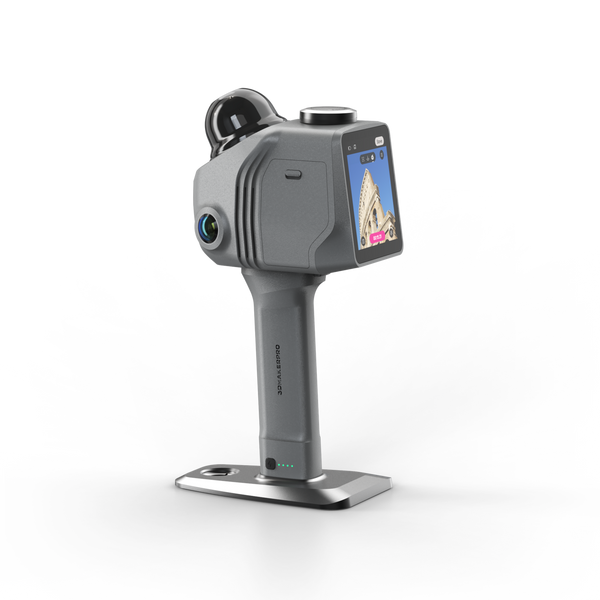
The integrated 3.9-inch AMOLED touchscreen allows investigators to preview scan coverage immediately in the field. Missing areas can be identified and rescanned before leaving the site, reducing the likelihood of discovering incomplete data after returning to the office.
A Permanent Digital Record for Future Analysis
One of the greatest advantages of LiDAR scanning is that it creates a permanent digital archive of the original crime scene. Instead of depending solely on photographs or written reports, investigators preserve the complete environment exactly as it existed during documentation.
This digital record can be shared with reconstruction specialists, forensic experts, attorneys, or juries without requiring additional visits to the original location. New evidence can also be examined against the preserved spatial data months or even years later, helping ensure that important details remain available throughout the entire judicial process.
As digital investigation techniques continue to evolve, three-dimensional documentation is becoming an increasingly valuable part of modern forensic workflows.
Looking Ahead
Technology alone does not solve crimes, but it can help preserve the truth. As LiDAR scanning and Gaussian Splatting continue to evolve, crime scene reconstruction will become more accurate, objective, and accessible throughout the entire investigative process. By preserving scenes as complete digital records, investigators can revisit evidence, reconstruct events with greater confidence, and present clearer findings in court. Ultimately, these technologies are about more than creating detailed 3D models. They help uncover what truly happened, provide answers for victims’ families and survivors, and support fair, evidence-based judicial decisions. Every accurately documented scene is another step toward ensuring that the truth is preserved and justice is better served. The 3DMakerpro Raven LiDAR Scanner is helping make that future possible.


Featured collection
LiDAR scanner
Raven LiDAR Scanner


Battery Grip
LiDAR scanner