Content

Refrigerated warehouses are essential to modern cold chain logistics, supporting industries from food distribution to pharmaceuticals. While temperature control remains the priority, another critical factor is often overlooked: how accurately the physical space is understood and managed. As facilities grow more complex, traditional documentation methods can no longer keep up with real-world operations.
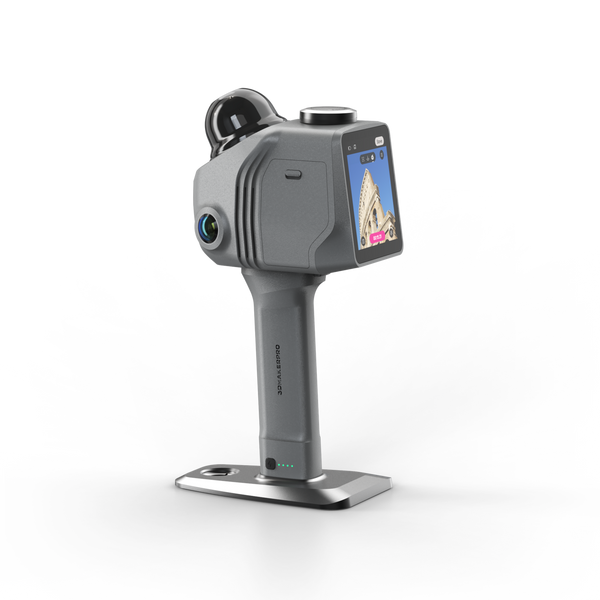
This is where solutions like the 3DMakerpro Raven LiDAR Spatial Scanner are redefining workflows. By enabling fast, accurate spatial capture, lidar scanner usage allows refrigerated environments to be digitized efficiently—turning static storage spaces into measurable, data-driven assets.
The Invisible Challenges of Cold Chain Documentation
Traditional documentation in refrigerated warehouses is notoriously inefficient. Manual measurements using tape measures or basic laser distance meters are slow and labor-intensive, especially when dealing with towering racks and narrow aisles. These processes often result in “data silos”—incomplete notes, blurry photos, and inconsistent measurements that require repeated site visits to verify.
Beyond the logistical headache, the human element is a major concern. Prolonged exposure to low temperatures creates a harsh working environment. Staff spending extended periods in cold storage to manually map out inventory, or structural changes face physical strain and safety risks. Furthermore, manual tools often malfunction in the cold: batteries drain, pens freeze, and touchscreen tablets become unresponsive.
The most significant limitation, however, is the lack of “reusable” data. A photo or a manual sketch only provides a snapshot in time. In contrast, sophisticated spatial digitization allows for the creation of a comprehensive “Digital Twin.” With a device like the 3DMakerpro Raven, the entire environment is captured once, creating a permanent 3D record that can be accessed, measured, and analyzed remotely at any time.

Precision and Speed: The Core of Raven’s Performance
In a high-stakes environment like a refrigerated warehouse, speed equals cost savings. One of the most immediate advantages of lidar scanner usage is the drastic reduction in time on-site. The 3DMakerpro Raven is engineered for rapid data acquisition, enabling users to document large-scale areas in a matter of minutes—a task that previously required a full workday.
Accuracy is the cornerstone of the Raven’s value proposition. Unlike photogrammetry, which often struggles with the repetitive textures and metallic surfaces of warehouse shelving, Raven’s LiDAR technology provides absolute geometric certainty. The device delivers exceptional ranging precision tailored for large-scale industrial environments:
2cm accuracy at 10 meters, ideal for detailed rack inspections.
3cm accuracy at 20 meters, providing reliable data for aisle and floor planning.
5cm accuracy even at 40 meters, ensuring structural integrity is captured across vast open zones.
This level of detail ensures that every pallet position, overhead cooling vent, and structural column is recorded with professional-grade precision. By moving through the aisles at a walking pace, the scanner emits thousands of laser pulses per second, building a precise point cloud that serves as a “single source of truth” for logistics planning and facility management.

Reliable Performance in Low-Light and High Spaces
Refrigerated warehouses present unique visual challenges. To save energy, these facilities are often dimly lit, and the repetitive nature of long, narrow aisles can disorient traditional camera-based systems.
LiDAR technology solves this by being an "active" sensing system. The 3DMakerpro Raven utilizes a high-performance 905 nm laser light source, allowing it to perform flawlessly in low-light or even pitch-black environments. It doesn't need ambient light to "see" the space, making it ideal for deep-storage zones or warehouses with motion-activated lighting. Crucially, this laser system meets the Class 1 (IEC60825-1:2014) Eye Safe standard, ensuring that it can be operated in busy environments without posing any risk to the vision of onsite personnel.
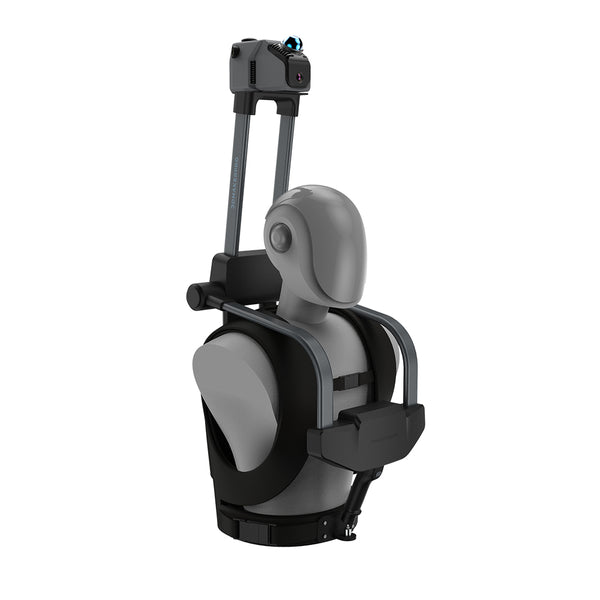
Furthermore, capturing data from the towering heights of modern high-bay warehouses used to be a safety hazard, requiring staff to climb tall ladders or operate specialized lift equipment. Today, a modern lidar scanner application involves mounting the lightweight Raven (only 1.1kg) onto a drone. By utilizing drone-based scanning, operators can effortlessly capture overhead cooling units, structural supports, and the highest rack levels from the air. This aerial approach eliminates the need for ladders, drastically improving worker safety while ensuring no corner of the facility is left unmapped.
Beyond the Point Cloud: 4K Visualization
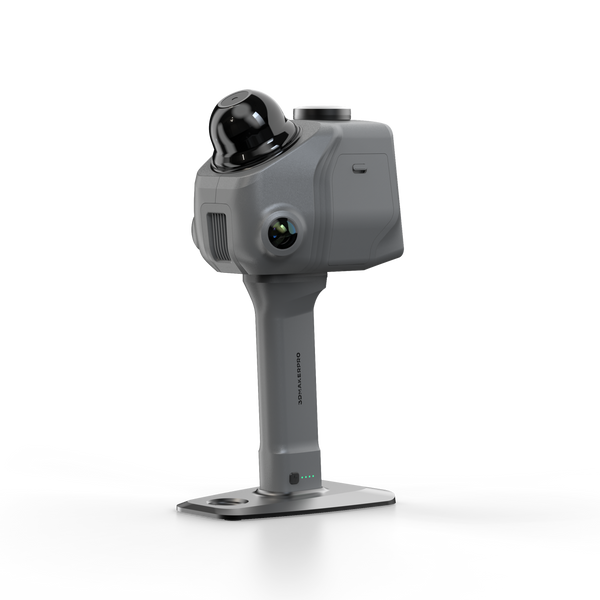
Modern warehouse management requires more than just a skeletal frame; it requires visual context. The 3DMakerpro Raven bridges the gap between engineering-grade data and realistic visualization.[1] Equipped with high-resolution 12MP cameras, the device produces colorized point clouds that make it easy to distinguish between different product types, labels, and safety signage.
Furthermore, the Raven supports 4K Gaussian splatting—a cutting-edge technique that creates highly realistic 3D reconstructions. When combined with an external 360° camera, this lidar scanner application unlocks an even richer level of detail, bringing the real-world environment into the digital realm with stunning clarity. Using the integrated RayStudio software, this data is processed into intuitive models, allowing warehouse managers to review storage density or conduct safety audits from the comfort of an office.

Optimized for the Cold: Reliability in the Field
Hardware durability is a non-negotiable factor in the cold chain. The 3DMakerpro Raven is designed to operate within a temperature range of 0°C to 35°C (32°F to 95°F), making it perfectly suited for standard refrigerated warehouses and pharmaceutical cold storage.
One of the most practical features for cold-environment lidar scanner usage is the Raven’s swappable battery grip. Cold temperatures are notorious for draining lithium-ion batteries quickly. The Raven’s design allows users to swap its 12,000mAh battery handle in seconds, ensuring that the scanning workflow remains uninterrupted even during large-scale facility audits. This operational continuity is essential for maintaining productivity in high-volume logistics hubs.
From Industry to Home: Smart Inventory Management
While professional LiDAR scanner usage is transforming large-scale logistics, the versatility of this technology also extends to our everyday lives. Have you ever wondered if a spatial scanner could be useful at home? The answer is a resounding yes. 3D scanning enthusiasts are now using devices like the Raven to digitize their own household "cold chain"—the family refrigerator.
By scanning the interior of a fridge, you can create a precise digital record of your current stock. This allows you and your family to easily track favorite fruits, vegetables, and meats. Before heading to the grocery store, a quick check of your 3D model can remind you exactly what is hiding in the back of the produce drawer. This not only prevents the frustration of duplicate purchases but also helps reduce food waste by ensuring you use what you already have. It is a practical, modern solution for managing household resources with the same efficiency as a professional logistics hub.

The Future of Spatial Intelligence
As the global supply chain becomes increasingly digitized, the adoption of spatial digital twins is no longer an optional luxury—it is a competitive necessity. The 3DMakerpro Raven LiDAR Spatial Scanner offers a vital bridge between the physical constraints of refrigerated storage and the limitless possibilities of digital management.
By integrating the Raven into their daily operations, businesses are not just digitizing their physical assets; they are building a smarter, more resilient, and more transparent cold chain infrastructure. In an industry where every degree of temperature and every centimeter of space matters, LiDAR provides the foundation for operational excellence. As we move toward a more automated future, those who master the art of spatial digitization today will be the leaders of the logistics landscape tomorrow, ensuring that the cold chain remains unbroken, data-driven, and more efficient than ever before.

Featured collection
LiDAR scanner
Raven LiDAR Scanner


Battery Grip